
 The tits are active, noisy and social birds.
 Pussy
Pussy4/07/2006

4/02/2006
In Memoriam [APRIL 2, 2006]
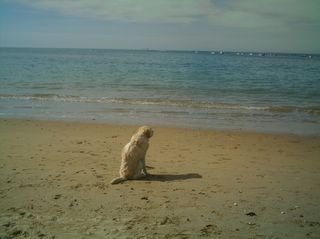
Our faithful steed, our cherished companion, our loyal blind Labrador, Ema... passed away suddenly this week.

She had hardly eaten anything at all for about a week and had even once fainted from exhaustion when we decided to take her to the vet on Monday. The blood test results came back on Tuesday afternoon and it didn’t look too good. Acute kidney failure. Ema’s primary metabolic organ had ceased to filter out bodily toxins and would no longer expel them through the bladder. Her urine had, instead, turned into nearly the same consistency as water as the deadly toxins slowly built up in her bloodstream. By the time we noticed the problem – by the time the poison started having adverse effects on her eating habits and visibly altering her behavior – it was already too late. The vet told us she would soon lose her appetite completely and begin to vomit whatever bile had managed to work its way back up her digestive system. She would eventually starve to death if the toxins didn’t kill her first. Finally, we were told about one of the strange side-effects of the poisoned blood now coursing through our faithful friend’s veins. It was numbing her entire nervous system with the same result as if she were drunk, high, or both. She couldn’t feel a thing...
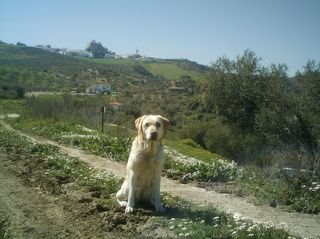
We took Ema home to consider her options and give our friend what would be the last thing she ever ate – a single slice of Spanish chorizo. We offered her more but she simply wouldn’t touch the cured meat. The predicted complete loss of appetite had already begun. Ema didn’t eat a morsel the rest of that day nor the next few days. She was soon too weak to even sit up or even wag her tail and, on Wednesday afternoon, emptied the contents of her bile-saturated stomach onto herself. There was nothing more that could be done. We made the difficult decision to euthanize our faithful companion and put her out of her misery as we scheduled that most difficult of visits to the veterinary office the next day...
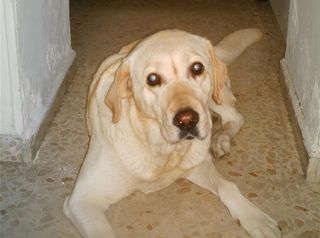
The vet gave Ema a tranquilizer which put her to sleep as her furry doggie head rested on my crying fiancée’s feet. I gently lifted our slumbering comrade and took her into the operating room where we placed her on the stainless steel table in the center. The vet shaved her forepaw, found a vein, and inserted the needle. Our loyal steed’s heart ceased beating a few seconds later...

Time, it is written, heals all and I’m sure it will. After all, this is only our third day without Ema. The thing is – I never thought I would be so grief-ridden over the death of a mutt. If a year ago, someone had told me that their dog had just died, I would simply tell them to get over it and buy a new one. What’s the big deal? But things are different now. I only lived with Ema for a bit over half a year here in Spain, but she was my dog, damn it. She had her own personality, her own quirks, and her own habits. They say no human has the same exact fingerprint and I’m sure no doggie sniffs other doggie’s genitalia in the same exact way. What I now know that I didn’t one year ago is that you can always replace a pet, but you can’t replace an individual.

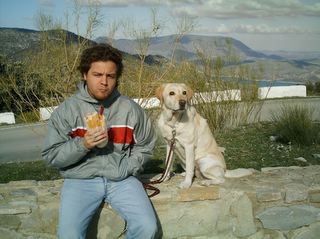
Ema started out as a pet - first my fiancée's and then mine...
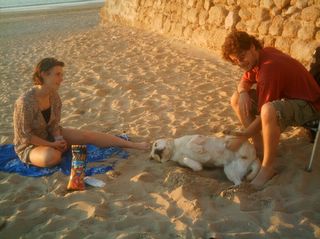

But she ended up being more than that... A true member of the family
It’s these small things – those little quirks and habits – that my fiancée and I miss the most now that our little furry friend has parted. There’s no one to eagerly greet us with a wagging tail at the door anymore, only an empty apartment. There’s no one to follow me into the bathroom each time I go to stink it up, only a foul stench that lingers until a window is opened or a match is lit. Worst of all, there’s no one sleeping or resting under our kitchen table. That was Ema’s home, her bed. Now it just doesn’t feel the same each time I walk into that room. I still find myself looking underneath it, looking for that faithful face anxious to get a gentle pat on the head or little scratch on that soft tummy of hers... But she’s not just not there anymore. There’s an emptiness under that table now, just as there’s an emptiness in our hearts.
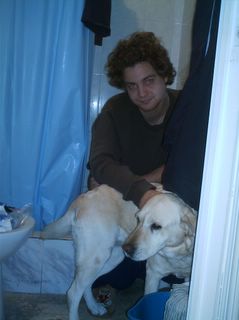
Who will put up with my bathroom stench now?
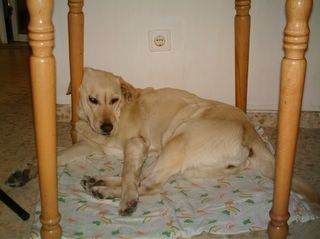
And when will I stop looking under the kitchen table for something that's not there?
Hell, I even miss the things that Ema used to do that really pissed me off. And nothing pissed me off more than her inopportune bowel movements. Every time she took a dump outside a busy street corner café or on the beach, I invariably ended up bending over to scoop up that stanky pile of poo. A brief apology to those staring at me degradingly and I would be on my embarrassed way. How I hated that mutt at moments like that! She even got in one last defecation-insult before she went... As I lifted a tranquilized, high and drunk Ema for the final time this past Thursday to put her on the vet’s operating table she – you guessed it – left a little poo scented smear on my favorite shirt and beige dress pants. But who can hold it against that faithful steed now? It must have been her way of saying goodbye... One last "zinger" for the road.
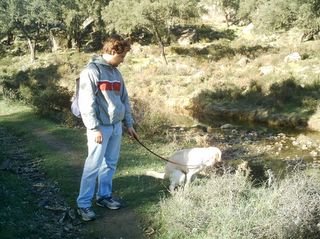
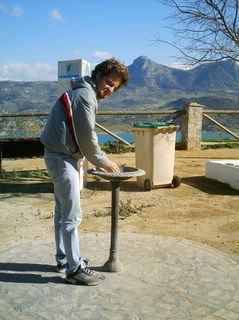
Ema could do her business at any moment... And I often paid the price with the infamous Poo-Finger
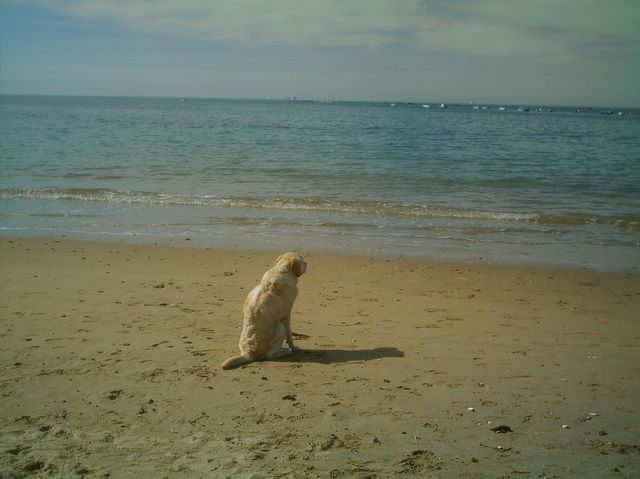
But all of that is now said and done. The good times and the bad have both begun that inexorable journey of change, a change into nothing but fond memories for those we once loved. Ema – our faithful steed, our cherished companion, our loyal blind Labrador – you will be sorely missed in both our homes and our hearts. And although I don’t believe in God, Buddha, Vishnu, or Jesus, I do believe in the Great Mutt-hammed. And I’m sure, wherever Ema may be in Doggie Heaven, she’s sniffing genitalia, chasing tennis balls, and pooing in front of busy cafés to her dear heart’s content...
_________________________________________________________________
Homer’s The Odyssey (Book XVII: 34-37) – Odysseus [in disguise as a beggar as he first arrives home in Ithaca] and Eumaios [his old friend who has yet to recognize the disguise] converse in front of Odysseus’ palace:
Now as these two were conversing thus with each other,
a dog who was lying there raised his head and ears. This was
Argos, patient-hearted Odysseus’ dog, whom he himself
raised, but got no joy of him, since before that he went to sacred
Troy. In the days before, the young men had taken him
out to follow goats of the wild, and deer, and rabbits;
but now he had been put aside, with his master absent,
and lay on the deep pile of dung, from the mules and oxen,
which lay abundant before the gates, so that the servants
of Odysseus could take it to his great estate, for manuring.
There the dog Argos lay in the dung, all covered with dog ticks.
Now, as he perceived that Odysseus had come close to him,
he wagged his tail, and laid both ears back; only
he now no longer had the strength to move any closer
to his master, who, watching him from a distance, without Eumaios
noticing, secretly wiped a tear away, and said to him:
"Eumaios, this is amazing, this dog that lies on the dunghill.
The shape of him is splendid, and yet I cannot be certain
whether he had the running speed to go with this beauty,
or is just one of the kind of table dog that gentlemen
keep, and it is only for show that their masters care for them."
Then, O swineherd Eumaios, you said to him in answer:
"This, it is too true, is the dog of a man who perished
far away..."
So he spoke, and went into the strongly settled palace,
and strode straight on, to the great hall and the haughty suitors.
But the doom of dark death now closed over the dog, Argos,
when, after nineteen years had gone by, he had finally seen Odysseus.
_________________________________________________________________
.jpg)
She had hardly eaten anything at all for about a week and had even once fainted from exhaustion when we decided to take her to the vet on Monday. The blood test results came back on Tuesday afternoon and it didn’t look too good. Acute kidney failure. Ema’s primary metabolic organ had ceased to filter out bodily toxins and would no longer expel them through the bladder. Her urine had, instead, turned into nearly the same consistency as water as the deadly toxins slowly built up in her bloodstream. By the time we noticed the problem – by the time the poison started having adverse effects on her eating habits and visibly altering her behavior – it was already too late. The vet told us she would soon lose her appetite completely and begin to vomit whatever bile had managed to work its way back up her digestive system. She would eventually starve to death if the toxins didn’t kill her first. Finally, we were told about one of the strange side-effects of the poisoned blood now coursing through our faithful friend’s veins. It was numbing her entire nervous system with the same result as if she were drunk, high, or both. She couldn’t feel a thing...

We took Ema home to consider her options and give our friend what would be the last thing she ever ate – a single slice of Spanish chorizo. We offered her more but she simply wouldn’t touch the cured meat. The predicted complete loss of appetite had already begun. Ema didn’t eat a morsel the rest of that day nor the next few days. She was soon too weak to even sit up or even wag her tail and, on Wednesday afternoon, emptied the contents of her bile-saturated stomach onto herself. There was nothing more that could be done. We made the difficult decision to euthanize our faithful companion and put her out of her misery as we scheduled that most difficult of visits to the veterinary office the next day...
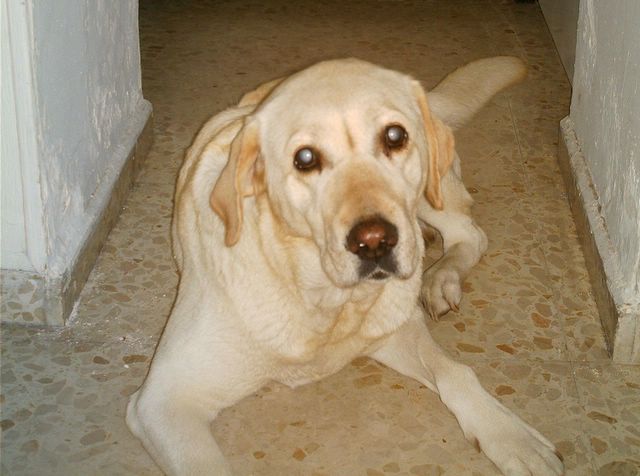
The vet gave Ema a tranquilizer which put her to sleep as her furry doggie head rested on my crying fiancée’s feet. I gently lifted our slumbering comrade and took her into the operating room where we placed her on the stainless steel table in the center. The vet shaved her forepaw, found a vein, and inserted the needle. Our loyal steed’s heart ceased beating a few seconds later...
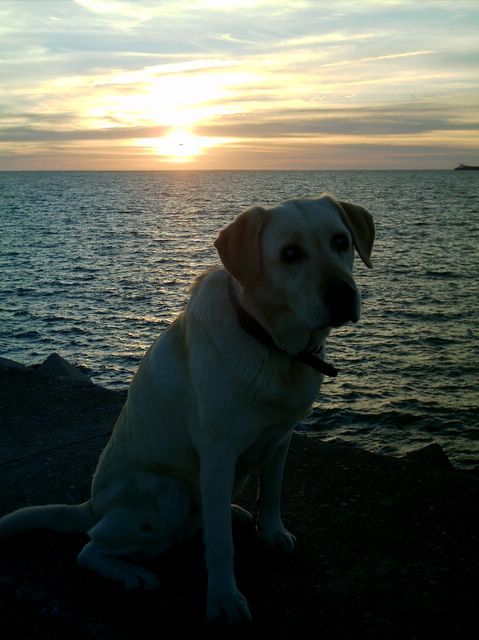
Time, it is written, heals all and I’m sure it will. After all, this is only our third day without Ema. The thing is – I never thought I would be so grief-ridden over the death of a mutt. If a year ago, someone had told me that their dog had just died, I would simply tell them to get over it and buy a new one. What’s the big deal? But things are different now. I only lived with Ema for a bit over half a year here in Spain, but she was my dog, damn it. She had her own personality, her own quirks, and her own habits. They say no human has the same exact fingerprint and I’m sure no doggie sniffs other doggie’s genitalia in the same exact way. What I now know that I didn’t one year ago is that you can always replace a pet, but you can’t replace an individual.
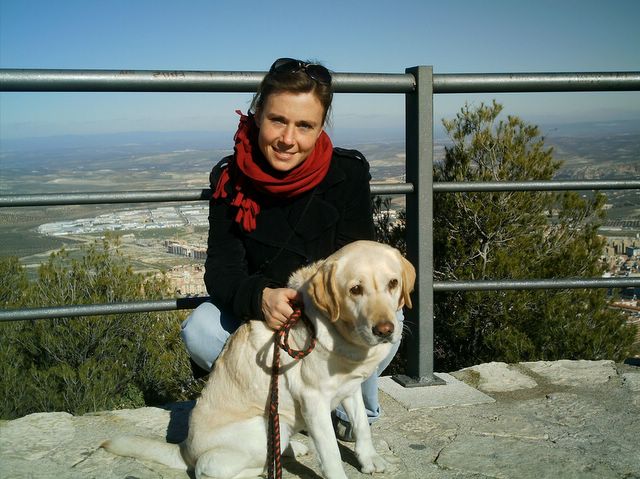
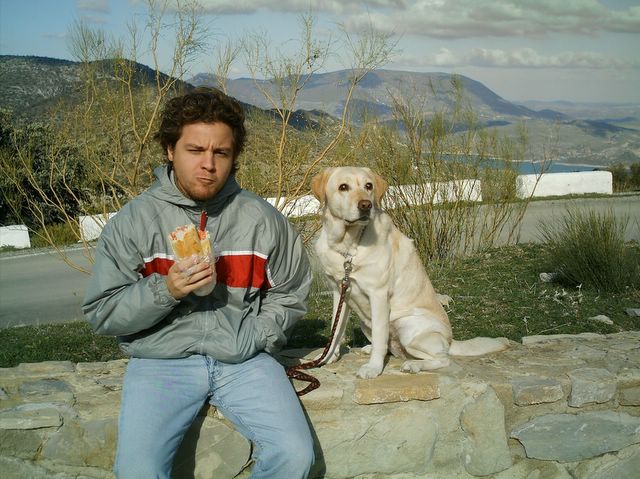
Ema started out as a pet - first my fiancée's and then mine...


But she ended up being more than that... A true member of the family
It’s these small things – those little quirks and habits – that my fiancée and I miss the most now that our little furry friend has parted. There’s no one to eagerly greet us with a wagging tail at the door anymore, only an empty apartment. There’s no one to follow me into the bathroom each time I go to stink it up, only a foul stench that lingers until a window is opened or a match is lit. Worst of all, there’s no one sleeping or resting under our kitchen table. That was Ema’s home, her bed. Now it just doesn’t feel the same each time I walk into that room. I still find myself looking underneath it, looking for that faithful face anxious to get a gentle pat on the head or little scratch on that soft tummy of hers... But she’s not just not there anymore. There’s an emptiness under that table now, just as there’s an emptiness in our hearts.
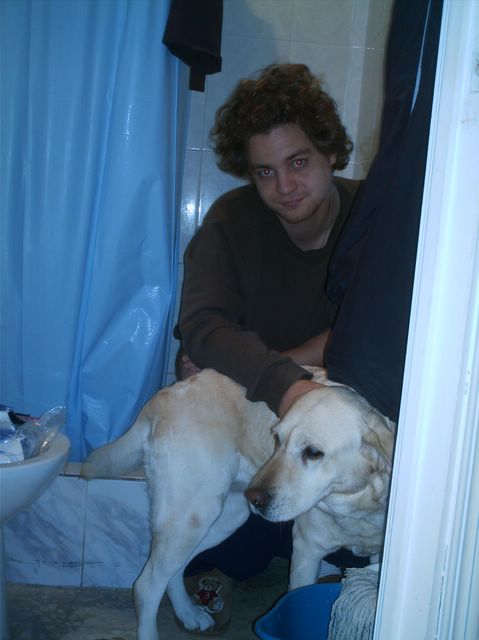
Who will put up with my bathroom stench now?

And when will I stop looking under the kitchen table for something that's not there?
Hell, I even miss the things that Ema used to do that really pissed me off. And nothing pissed me off more than her inopportune bowel movements. Every time she took a dump outside a busy street corner café or on the beach, I invariably ended up bending over to scoop up that stanky pile of poo. A brief apology to those staring at me degradingly and I would be on my embarrassed way. How I hated that mutt at moments like that! She even got in one last defecation-insult before she went... As I lifted a tranquilized, high and drunk Ema for the final time this past Thursday to put her on the vet’s operating table she – you guessed it – left a little poo scented smear on my favorite shirt and beige dress pants. But who can hold it against that faithful steed now? It must have been her way of saying goodbye... One last "zinger" for the road.
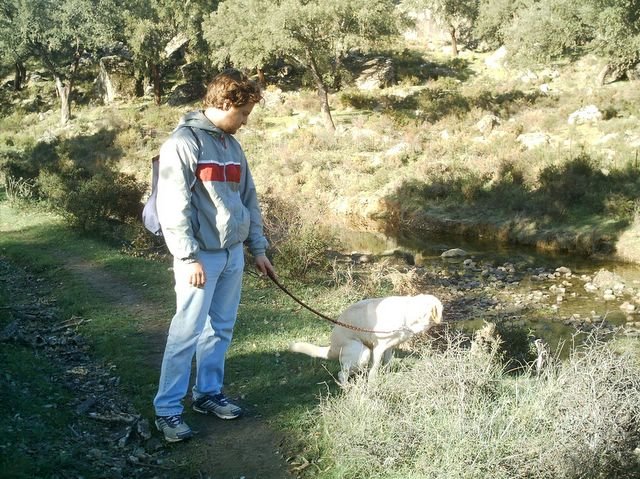

Ema could do her business at any moment... And I often paid the price with the infamous Poo-Finger
But all of that is now said and done. The good times and the bad have both begun that inexorable journey of change, a change into nothing but fond memories for those we once loved. Ema – our faithful steed, our cherished companion, our loyal blind Labrador – you will be sorely missed in both our homes and our hearts. And although I don’t believe in God, Buddha, Vishnu, or Jesus, I do believe in the Great Mutt-hammed. And I’m sure, wherever Ema may be in Doggie Heaven, she’s sniffing genitalia, chasing tennis balls, and pooing in front of busy cafés to her dear heart’s content...
_________________________________________________________________
Homer’s The Odyssey (Book XVII: 34-37) – Odysseus [in disguise as a beggar as he first arrives home in Ithaca] and Eumaios [his old friend who has yet to recognize the disguise] converse in front of Odysseus’ palace:
Now as these two were conversing thus with each other,
a dog who was lying there raised his head and ears. This was
Argos, patient-hearted Odysseus’ dog, whom he himself
raised, but got no joy of him, since before that he went to sacred
Troy. In the days before, the young men had taken him
out to follow goats of the wild, and deer, and rabbits;
but now he had been put aside, with his master absent,
and lay on the deep pile of dung, from the mules and oxen,
which lay abundant before the gates, so that the servants
of Odysseus could take it to his great estate, for manuring.
There the dog Argos lay in the dung, all covered with dog ticks.
Now, as he perceived that Odysseus had come close to him,
he wagged his tail, and laid both ears back; only
he now no longer had the strength to move any closer
to his master, who, watching him from a distance, without Eumaios
noticing, secretly wiped a tear away, and said to him:
"Eumaios, this is amazing, this dog that lies on the dunghill.
The shape of him is splendid, and yet I cannot be certain
whether he had the running speed to go with this beauty,
or is just one of the kind of table dog that gentlemen
keep, and it is only for show that their masters care for them."
Then, O swineherd Eumaios, you said to him in answer:
"This, it is too true, is the dog of a man who perished
far away..."
So he spoke, and went into the strongly settled palace,
and strode straight on, to the great hall and the haughty suitors.
But the doom of dark death now closed over the dog, Argos,
when, after nineteen years had gone by, he had finally seen Odysseus.
_________________________________________________________________
3/26/2006
Pichas and Chochos [MARCH 26, 2006]
If there’s one thing responsible parents the world over don’t tolerate in the least from their young ones – apart from incest – it’s cussing. Whereas playing doctor with lil’ sis’ or big bro’ is about as naughty as it gets, an inappropriate vulgarity uttered in the presence of Mommy or Daddy will sometimes get that temper going just as much. Sure a few curses slip through in the older kids but, at least while they’re still young, most attempts are made at keeping "potty mouth" exposure to a minimum. Parents and neighbors alike take precautions to watch what they’re saying and what is said around toddlers and the easily-impressionable ones. For the most part, everyone around the child takes care to adhere to this rigid censorship of F-, A-, and C- words. Even, horror of horrors, "Big Tits" and "Pussy" are normally vocabulary that’s out of bounds too. In fact, their usage might cause you to be approached by a stranger and told, "Hey buddy, watch your mouth!" if you’re not careful when there’s a baby carriage around. It even happened to me once back in Pennsylvania when, while at a shopping mall food court, I was extolling the virtues of two recently viewed feature-length films aptly named Night of the Giving Head and Lawrence of Her Labia. Apparently, the soccer moms seated behind me didn’t appreciate the humor involved.
I haven’t really noticed this much care being taken to preserve a child’s innocence here in Spain though. Everyone from Great Grandma to Neighbor Pablo from across the street curse a blue streak – children in the vicinity be damned. The first discernable Spanish word I heard and learned upon first visiting this country nearly two years ago was in Barcelona. I was exploring the architecturally rich metropolis and stopped at a lovely little neighborhood park to watch a group of stereotypical Spanish old men (checkered dress shirts, Panama hats, and all) compete in a friendly game of bocce-ball. Their frail, silver-haired wives sat on the benches behind them gossiping away while minding the grandchildren innocently playing at their feet. "¡Coño!" exclaimed one sweet old pensioner as an opponent knocked one of his balls out of the way. A minute or so later, another "¡Coño!" flew out of a different retiree’s mouth as his ball was also, in turn, displaced. By the time the fifth "¡Coño!" had made its appearance, I knew it was time for my faithful little bilingual dictionary and the first true Spanish lesson of my life. [COÑO:- (1) vulgar cunt (2) vulgar interjection fuck me!; for fuck’s sake!]
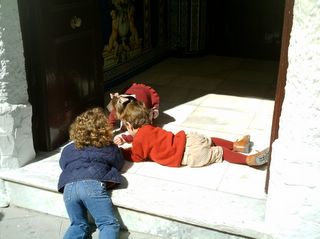
"Run for the hills, children! Cover your ears! GranPa's playing bocce-ball."
The extensive use of coño throughout the Iberian Peninsula, however, is well documented. It’s the one swear word – well, at least the nastiest – that seems to slip effortlessly into the daily conversations of fellow Spaniards from the Canary Islands to the Pyrenees Mountains. I think that because it is used so often, the word has simply come to lose the power of insult and vulgarism that its English equivalent still possesses. Coño, in my opinion, is now about as much an insult in Spain as "darn" is to a Kansas City grandmother. You use it when you over-bake an apple pie crust and you use it when someone knocks your bocce ball out of the way – whether there are kids around or not.

"¡Coño! This kitty won't sit still. And to top it all off,
I burned my filthy coño of an apple pie this morning too, dang nabbit."
In Cádiz, though, it’s a different story. My neighbors and fellow residents in this city encircled by the ocean are so vulgar that a simple coño will never do. It just doesn’t quite pack that much of a punch down here. Think about it. We’re talking about Cádiz: The oldest port in Europe; Columbus’ point of embarkation on his second and fourth voyages across the Atlantic; Home of the invincible Spanish Armada; Harbor for Napoleon’s mighty Franco-Hispanic fleet (which the British Royal Navy defeated a few miles down the coast at the Battle of Trafalgar); And the Spanish Empire’s only trading link to its vast overseas possessions for well over two centuries. If this city hasn’t seen its fair share of sailors over the years, then I don’t know what city has. The result? These people have sailor-talk pulsing through their veins. Sure they use the ubiquitous coño in the same manner and respect as their fellow countrymen, but the people of Cádiz have come to incorporate the vastly more graphic picha and chocho (locally pronounced piSHa and SHoSHo due to the accent) into their everyday speech as well. Bilingual Spanish dictionary lesson number two: [PICHA:- (1) extremely vulgar cock; prick] [CHOCHO:- (1) extremely vulgar cunt; pussy]

Cádiz: A harbor of sailor-talk for nearly three millennia
So how do the people of Cádiz use these little linguistic treasures? Well, they don’t save them for the occasional game of bocce-ball or apple pie bake, that’s for sure. Picha and chocho are so wide spread in their local usage that I would roughly equate them to my own "man," "buddy," or "pal." Picha for males. Chocho for females. It’s a bit shocking when you first hear it and realize what’s being said, but one eventually grows accustomed to such statements as: "Could you please pass me the menu, picha?" and "Good morning, chocho. That’s a nice dress you’ve got on." Everyone from your grandmother to your newborn baby daughter turns into a chocho and all the men from your crippled veteran grandfather to baby Juan become a picha. I once heard a 12-year-old girl talking to her grandmother and ask, "Where were you yesterday at dinner, chocho. We missed you!"
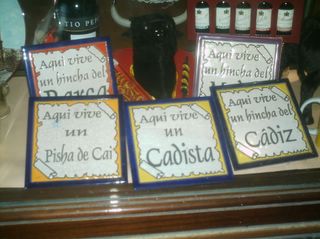
Nothing says Home, Sweet Home like a "Here lives a piSHa from Cai [Cádiz]" plaque
The simple fact that an observer can overhear a 12-year-old girl calling her Granny a chocho in the middle of town just goes to show how widespread the use of these most vulgar of words is. Customers call shop assistants chochos who in turn tell the other picha customers to wait their turn in line. Wives call their husbands pichas and the husbands call both their mistresses and wives chochos. Each time I’m stopped in the street and asked for either a cigarette, a light, or the time, the request inevitably includes a well-placed picha somewhere before the question mark. But that’s adults and teenagers. What about the kids?
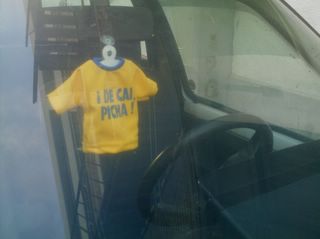
Always an appropriate rear-view mirror decoration for the family car:
"[We're] From Cai [Cádiz], PICHA!"
Well, the little ones’ language here in Cádiz is just as bad as their elders and, no doubt, because of them. A twelve-year-old doesn’t learn chocho by watching Sesame Street. She learns it by listening to her mother and father who probably call her one all the time. And even if they don’t, there are plenty of places to see these words displayed throughout the city. Souvenir shops sell t-shirts with picha and chocho scribbled on the front. Football slogans and local songs incorporate the cussing into their lyrics. Hell, if Cádiz had an anthem, I’m sure it would even be included in that. And as for the Doubting Thomases amongst you, who may believe that one 12-year-old’s foul mouth was probably the exception and not the norm, I should remind you that both my finacée and I teach the little children of Cádiz on a daily basis. Trust me... They’re all well versed in the use of coño, chocho, and picha by the time they hit their eighth birthday.
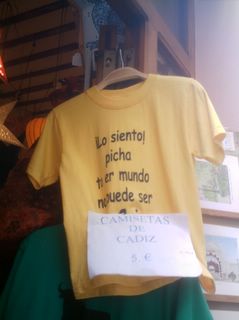

Mommy, Daddy! Can I please get a "Sorry, PICHA, the whole world can't be from Cádiz" t-shirt!
I'll be the most popular kid in GC Philo's English class!
At the end of the day, though, there’s nothing one can do about it. As vulgar and crude as this may seem to the occasional outsider or tourist with a basic knowledge of Spanish, you eventually realize it’s just the way these sailor descendants speak. If you want to be a part of Cádiz and truly experience its culture, then you have to learn to embrace it and join in the "potty mouth" fun. It may be difficult at first but – as long as you’re not a Bible-Thumper from Mississippi with an innate hatred for anything unGodly – you’ll eventually adapt and learn to let go of any initial inhibitions. Take me for example. I used to punish my pupils for using bad words but have now come to see the error of my ways. What’s the point of me trying to clean up their language in the classroom when their parents use it every five minutes at home? ...An apple doesn’t fall far from the tree. When in Rome, do as the Romans do. If you can’t beat them, join them... I’ve even come up with my own little Cádiz-style proverb: "A picha in the hand is worth two in the bush." Unfortunately, in translation, these words of wisdom are somehow lost on the undiscerning ear.
I haven’t really noticed this much care being taken to preserve a child’s innocence here in Spain though. Everyone from Great Grandma to Neighbor Pablo from across the street curse a blue streak – children in the vicinity be damned. The first discernable Spanish word I heard and learned upon first visiting this country nearly two years ago was in Barcelona. I was exploring the architecturally rich metropolis and stopped at a lovely little neighborhood park to watch a group of stereotypical Spanish old men (checkered dress shirts, Panama hats, and all) compete in a friendly game of bocce-ball. Their frail, silver-haired wives sat on the benches behind them gossiping away while minding the grandchildren innocently playing at their feet. "¡Coño!" exclaimed one sweet old pensioner as an opponent knocked one of his balls out of the way. A minute or so later, another "¡Coño!" flew out of a different retiree’s mouth as his ball was also, in turn, displaced. By the time the fifth "¡Coño!" had made its appearance, I knew it was time for my faithful little bilingual dictionary and the first true Spanish lesson of my life. [COÑO:- (1) vulgar cunt (2) vulgar interjection fuck me!; for fuck’s sake!]
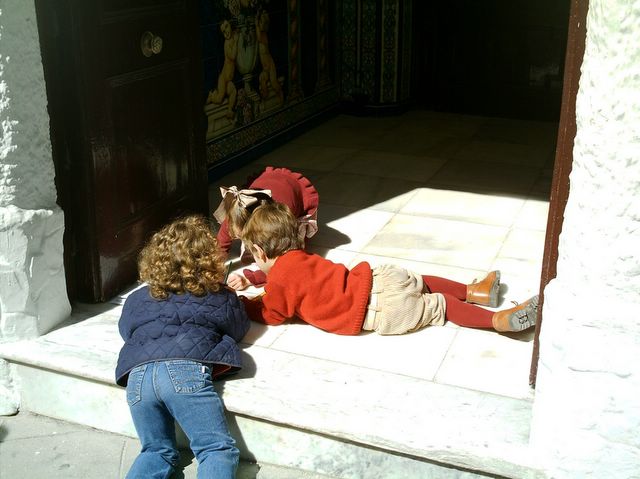
"Run for the hills, children! Cover your ears! GranPa's playing bocce-ball."
The extensive use of coño throughout the Iberian Peninsula, however, is well documented. It’s the one swear word – well, at least the nastiest – that seems to slip effortlessly into the daily conversations of fellow Spaniards from the Canary Islands to the Pyrenees Mountains. I think that because it is used so often, the word has simply come to lose the power of insult and vulgarism that its English equivalent still possesses. Coño, in my opinion, is now about as much an insult in Spain as "darn" is to a Kansas City grandmother. You use it when you over-bake an apple pie crust and you use it when someone knocks your bocce ball out of the way – whether there are kids around or not.
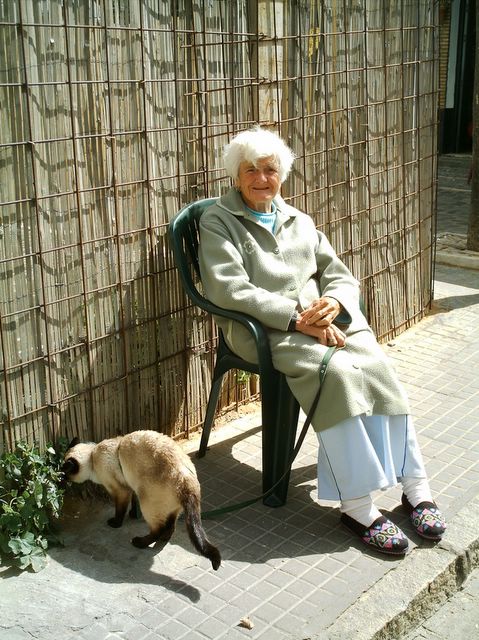
"¡Coño! This kitty won't sit still. And to top it all off,
I burned my filthy coño of an apple pie this morning too, dang nabbit."
In Cádiz, though, it’s a different story. My neighbors and fellow residents in this city encircled by the ocean are so vulgar that a simple coño will never do. It just doesn’t quite pack that much of a punch down here. Think about it. We’re talking about Cádiz: The oldest port in Europe; Columbus’ point of embarkation on his second and fourth voyages across the Atlantic; Home of the invincible Spanish Armada; Harbor for Napoleon’s mighty Franco-Hispanic fleet (which the British Royal Navy defeated a few miles down the coast at the Battle of Trafalgar); And the Spanish Empire’s only trading link to its vast overseas possessions for well over two centuries. If this city hasn’t seen its fair share of sailors over the years, then I don’t know what city has. The result? These people have sailor-talk pulsing through their veins. Sure they use the ubiquitous coño in the same manner and respect as their fellow countrymen, but the people of Cádiz have come to incorporate the vastly more graphic picha and chocho (locally pronounced piSHa and SHoSHo due to the accent) into their everyday speech as well. Bilingual Spanish dictionary lesson number two: [PICHA:- (1) extremely vulgar cock; prick] [CHOCHO:- (1) extremely vulgar cunt; pussy]

Cádiz: A harbor of sailor-talk for nearly three millennia
So how do the people of Cádiz use these little linguistic treasures? Well, they don’t save them for the occasional game of bocce-ball or apple pie bake, that’s for sure. Picha and chocho are so wide spread in their local usage that I would roughly equate them to my own "man," "buddy," or "pal." Picha for males. Chocho for females. It’s a bit shocking when you first hear it and realize what’s being said, but one eventually grows accustomed to such statements as: "Could you please pass me the menu, picha?" and "Good morning, chocho. That’s a nice dress you’ve got on." Everyone from your grandmother to your newborn baby daughter turns into a chocho and all the men from your crippled veteran grandfather to baby Juan become a picha. I once heard a 12-year-old girl talking to her grandmother and ask, "Where were you yesterday at dinner, chocho. We missed you!"
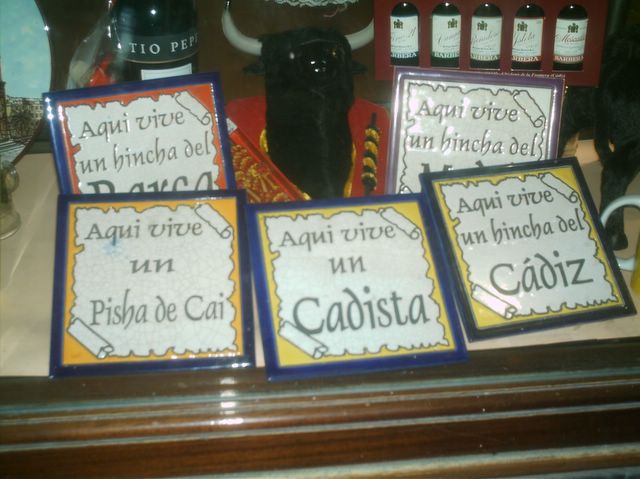
Nothing says Home, Sweet Home like a "Here lives a piSHa from Cai [Cádiz]" plaque
The simple fact that an observer can overhear a 12-year-old girl calling her Granny a chocho in the middle of town just goes to show how widespread the use of these most vulgar of words is. Customers call shop assistants chochos who in turn tell the other picha customers to wait their turn in line. Wives call their husbands pichas and the husbands call both their mistresses and wives chochos. Each time I’m stopped in the street and asked for either a cigarette, a light, or the time, the request inevitably includes a well-placed picha somewhere before the question mark. But that’s adults and teenagers. What about the kids?
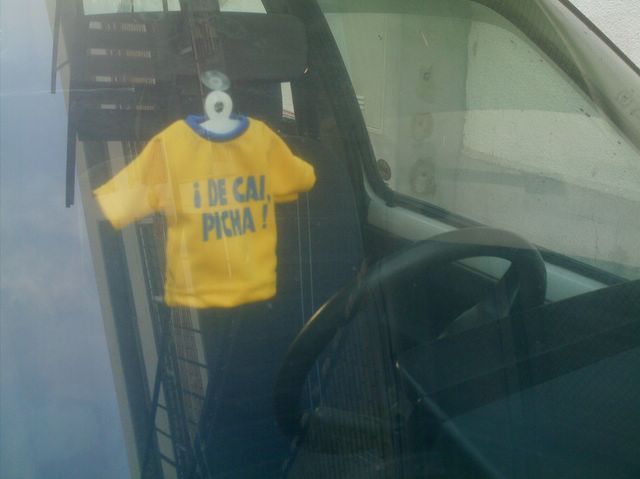
Always an appropriate rear-view mirror decoration for the family car:
"[We're] From Cai [Cádiz], PICHA!"
Well, the little ones’ language here in Cádiz is just as bad as their elders and, no doubt, because of them. A twelve-year-old doesn’t learn chocho by watching Sesame Street. She learns it by listening to her mother and father who probably call her one all the time. And even if they don’t, there are plenty of places to see these words displayed throughout the city. Souvenir shops sell t-shirts with picha and chocho scribbled on the front. Football slogans and local songs incorporate the cussing into their lyrics. Hell, if Cádiz had an anthem, I’m sure it would even be included in that. And as for the Doubting Thomases amongst you, who may believe that one 12-year-old’s foul mouth was probably the exception and not the norm, I should remind you that both my finacée and I teach the little children of Cádiz on a daily basis. Trust me... They’re all well versed in the use of coño, chocho, and picha by the time they hit their eighth birthday.

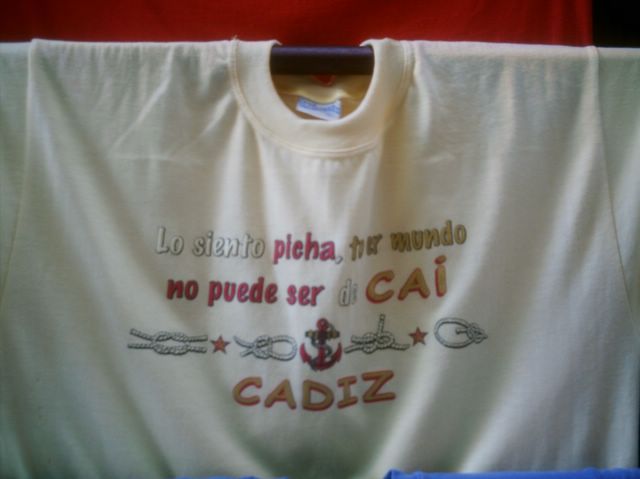
Mommy, Daddy! Can I please get a "Sorry, PICHA, the whole world can't be from Cádiz" t-shirt!
I'll be the most popular kid in GC Philo's English class!
At the end of the day, though, there’s nothing one can do about it. As vulgar and crude as this may seem to the occasional outsider or tourist with a basic knowledge of Spanish, you eventually realize it’s just the way these sailor descendants speak. If you want to be a part of Cádiz and truly experience its culture, then you have to learn to embrace it and join in the "potty mouth" fun. It may be difficult at first but – as long as you’re not a Bible-Thumper from Mississippi with an innate hatred for anything unGodly – you’ll eventually adapt and learn to let go of any initial inhibitions. Take me for example. I used to punish my pupils for using bad words but have now come to see the error of my ways. What’s the point of me trying to clean up their language in the classroom when their parents use it every five minutes at home? ...An apple doesn’t fall far from the tree. When in Rome, do as the Romans do. If you can’t beat them, join them... I’ve even come up with my own little Cádiz-style proverb: "A picha in the hand is worth two in the bush." Unfortunately, in translation, these words of wisdom are somehow lost on the undiscerning ear.
3/19/2006
Mein Home, Sweet Home [MARCH 19, 2006]
As expected, the south of Spain attracts quite a mixed lot of residents. Nearly permanent sunny skies, miles of golden beaches, mountains of fresh seafood, and the cheapest wine this side of that boxed stuff Hobo Joe usually carts around (although of vastly superior quality) all meet up at a crossroads here. The result? Colorful characters from the industrialized world over.
While most of these non-Spaniards flock to Andalucía’s Mediterranean coast, known as the Costa del Sol, we still get our fair share here on the Atlantic side, the Costa de la Luz. The guiris (local slang for foreigners) on the Costa del Sol have brought with them ugly utilitarian condo complexes and have inadvertently been the cause for everything from billboards to street sings that are no longer written in Spanish, but in German and English. Thankfully, we’ve been spared this mass invasion and conquest of Spanish culture here on the Costa de la Luz. Most of our guiris only come here as Spanish students and end up staying for the duration of their course – usually six months or so – before returning to Ireland, Norway, Russia or whichever other far-flung corner of the globe or continent they came from.
Of course, there are exceptions but these usually come from the dregs of society: Moroccan migrant laborers, African pirate DVD street merchants, Chinese brand-name design counterfeiters, German homeless alcoholics, and American English teachers. The last lot, though, are by far the worst... They haven’t showered in months, stink of cheap booze, stumble through the streets at night hurling drunken epithets in a language the locals don’t understand, and contributing nothing to society... I just re-read that sentence and sorry about the mix-up. I meant to say the second to last lot, the German homeless alcoholics, not the last lot, the American English teachers, do those things. We English teachers contribute a lot to society and, believe it or not, take a shower every now and then too.

Come on now... He doesn't REALLY look like an English teacher, does he?
Honestly though, I really am amazed at how many homeless Germans there are here. (There aren’t really any homeless Spaniards due to the fact that family bonds are so strong in this country and, no matter what, your parents will always give you a roof over your head – even if you are in your mid-forties, alcoholic, and unemployed.) My first roommate in Cádiz was a Brazilian doctor who has been working in a local clinic for years. He told me how, when he had finished work one day in 2002 and was walking home, a bunch of ragged German street-dwellers started following him and hassling him. It turned out, that evening was the final match of the World Cup (Germany versus Brazil) and they had seen the Brazilian flag on his backpack. They followed him all the way home and continued yelling in German and broken Spanish, "We’re gonna kick your ass tonight!" The one thing I couldn’t understand was, Where the hell do drunken, squalid and homeless Germans from the streets of Cádiz go to watch World Cup matches?

"Wake up guys... Günther, Hans. The big game's on in a few minutes!"
Besides, isn’t Germany supposed to have one of the best welfare states in Europe, if not the world? Aren’t Germans a stereotypically industrious lot capable of building superior-quality automobiles and creating order out of the most random chaos? Why do homeless Germans need to come to the Costa de la Luz when their country is large and rich enough to accommodate all of their numbers and then some? Maybe, the Fatherland is in search of some new Lebensraum. Poland proved too difficult to tame over half a century ago so now the mass armies of destitute, alcoholic Aryans have turned their expansionist dreams to this little corner of Andalucía. Or, more likely and who can blame them, they prefer being homeless by the sandy beach and in the warming sun to living is some half-frozen subway station in Frankfurt. Either way, they’re here to stay.

Screw Deutschland - The bums in Spain get siestas!
This brings me to my main point and the focus of this article. The only German that I know, personally, in Cádiz isn’t of the street-dwelling variety. She isn’t even a temporary student. No, she’s a full-time guiri like me and my only guiri neighbor. Her name is Roswitha and she lives two floors above me. As I previously said, she isn’t of the street-dwelling variety... but she might as well be. She always stinks of cheap booze, hardly speaks a word of Spanish, and stumbles through the narrow streets of the city at all hours of the day. I guess the sunny skies, golden beaches, and inexpensive wine drew her to Andalucía too. Fortunately for me, and for you dear reader, she must have been too sozzled up on the journey down from Deutschland because she ended up here on the Costa de la Luz instead of the immensely more popular, and Germanized, Costa del Sol.
Where to begin with Roswitha... She’s simply incredible. My girlfriend and I met her about a year ago. It must have been a few days after she had moved into our building when she first rang our doorbell. I opened up and saw a skinny woman with short gray hair and sunken cheeks. She appeared to be in her early fifties, "Perdone las molestias. Soy su nueva vecina. [Excuse the disturbance. I am your new neighbor.]" As I continued speaking to her and introduced myself, I realized that her knowledge of Spanish was basically confined to those first few words she had managed to spit out. The rest of the conversation was conducted on her part in a form of pidgin Spanish – using what little she knew of the local tongue and filling in the gaps with German or French. As it turned out, she was unable to open her door and needed some help with the locks. I went upstairs, put in the key, and opened the door on my first attempt. That’s when I smelled the booze on her breath and realized why she must have been having such a rough time getting the damn thing open. "Danke! Gracias! Danke!" she thanked me profusely. I told her it was nothing and, before I had a chance to go, she asked if my girlfriend and I were local Spaniards. I told her I was American and my girlfriend was Czech to which she replied, "Ohhh! Praga! Das ciudad is muy bonita! Muy bonita! [roughly, Ohhh! Prague! That city is very beautiful! Very beautiful!]" Apparently, she had visited Prague in the early Nineties. She said that she was from Cologne, thanked me again while expressing how beautiful Prague was, and bid me farewell with her whiskey-tainted breath as I descended the stairs to my apartment.
A week later. Thursday night. A buzz at the front door. "Si?" I responded through the intercom. "Perdone las molestias. Soy su nueva vecina..." Low and behold, it was Roswitha. She introduced herself once again and told me that she had problems with her lock – if only I would be kind enough to help her with the keys. She had no idea who my girlfriend and I were and asked me the same exact questions as before. When I told her that we weren’t Spanish but American and Czech, a look of surprise descended upon her bloodshot eyes and she began extolling the beautiful and breathtaking qualities of Prague. She then leant forward and told me, with a breath of booze that could have gotten an Irishman drunk, that she was from Cologne.
I think you know where this is going. At least once a fortnight, for the past year or so, Roswitha rings our buzzer and, after the "Perdone las molestias" routine, asks us to help her with the keys. She then inquires into our nationality and ends the conversation by praising the beauty of Prague. We finally had enough on Carnaval Tuesday when she pressed our buzzer at four in the morning. Half asleep, I answered the intercom to see who it was... "Perdone las molestias. Soy su nueva vecina..." That’s when my girlfriend and I let her have it. We told her we were trying to sleep, her locks worked fine if she would just sober up and learn how to actually put the key in the keyhole, and, for God’s sake, she wasn’t our new neighbor. She had been living in the same building as us for nearly a year now and – Yes, we knew – she was from Cologne, she had once visited Prague in the early Nineties and it was a beautiful city. She was taken aback by our sudden explosion of emotions and, when she had finally absorbed it all, asked us how it was possible that complete strangers knew so much about her. I told her to forget about it, grabbed her by the drunken arm, and helped her up the stairs and with her keys once again. By the time she rang our doorbell a week or so later, she had forgotten about the entire incident and the same ol’ routine had resumed.
My girlfriend (or I should now say my lovely fiancée!) and I have now come to terms with Roswitha’s little visits and learned to accept her drunken quirks, whiskey odor, and memory loss. She’s our own little piece of homeless Germany here in the very building we occupy and adds to the general experience of living in Cádiz. After all, the city has to put up with throngs of street-dwelling Aryans and we’ve only got one middle-aged booze-guzzling amnesiac who, for some reason, prefers pressing our buzzer when there are five other just as shiny buttons directly next to it. Didn’t you know? She doesn’t disturb our Spanish neighbors with her "Perdone las molestias" routine, just us. It’s like we share some sort of a cosmic guiri connection here in this foreign land... those wacky Germans and American English teachers like myself must have more in common than I initially thought (except for – and I swear – the whole not showering thing).
While most of these non-Spaniards flock to Andalucía’s Mediterranean coast, known as the Costa del Sol, we still get our fair share here on the Atlantic side, the Costa de la Luz. The guiris (local slang for foreigners) on the Costa del Sol have brought with them ugly utilitarian condo complexes and have inadvertently been the cause for everything from billboards to street sings that are no longer written in Spanish, but in German and English. Thankfully, we’ve been spared this mass invasion and conquest of Spanish culture here on the Costa de la Luz. Most of our guiris only come here as Spanish students and end up staying for the duration of their course – usually six months or so – before returning to Ireland, Norway, Russia or whichever other far-flung corner of the globe or continent they came from.
Of course, there are exceptions but these usually come from the dregs of society: Moroccan migrant laborers, African pirate DVD street merchants, Chinese brand-name design counterfeiters, German homeless alcoholics, and American English teachers. The last lot, though, are by far the worst... They haven’t showered in months, stink of cheap booze, stumble through the streets at night hurling drunken epithets in a language the locals don’t understand, and contributing nothing to society... I just re-read that sentence and sorry about the mix-up. I meant to say the second to last lot, the German homeless alcoholics, not the last lot, the American English teachers, do those things. We English teachers contribute a lot to society and, believe it or not, take a shower every now and then too.
.jpg)
Come on now... He doesn't REALLY look like an English teacher, does he?
Honestly though, I really am amazed at how many homeless Germans there are here. (There aren’t really any homeless Spaniards due to the fact that family bonds are so strong in this country and, no matter what, your parents will always give you a roof over your head – even if you are in your mid-forties, alcoholic, and unemployed.) My first roommate in Cádiz was a Brazilian doctor who has been working in a local clinic for years. He told me how, when he had finished work one day in 2002 and was walking home, a bunch of ragged German street-dwellers started following him and hassling him. It turned out, that evening was the final match of the World Cup (Germany versus Brazil) and they had seen the Brazilian flag on his backpack. They followed him all the way home and continued yelling in German and broken Spanish, "We’re gonna kick your ass tonight!" The one thing I couldn’t understand was, Where the hell do drunken, squalid and homeless Germans from the streets of Cádiz go to watch World Cup matches?
.jpg)
"Wake up guys... Günther, Hans. The big game's on in a few minutes!"
Besides, isn’t Germany supposed to have one of the best welfare states in Europe, if not the world? Aren’t Germans a stereotypically industrious lot capable of building superior-quality automobiles and creating order out of the most random chaos? Why do homeless Germans need to come to the Costa de la Luz when their country is large and rich enough to accommodate all of their numbers and then some? Maybe, the Fatherland is in search of some new Lebensraum. Poland proved too difficult to tame over half a century ago so now the mass armies of destitute, alcoholic Aryans have turned their expansionist dreams to this little corner of Andalucía. Or, more likely and who can blame them, they prefer being homeless by the sandy beach and in the warming sun to living is some half-frozen subway station in Frankfurt. Either way, they’re here to stay.

Screw Deutschland - The bums in Spain get siestas!
This brings me to my main point and the focus of this article. The only German that I know, personally, in Cádiz isn’t of the street-dwelling variety. She isn’t even a temporary student. No, she’s a full-time guiri like me and my only guiri neighbor. Her name is Roswitha and she lives two floors above me. As I previously said, she isn’t of the street-dwelling variety... but she might as well be. She always stinks of cheap booze, hardly speaks a word of Spanish, and stumbles through the narrow streets of the city at all hours of the day. I guess the sunny skies, golden beaches, and inexpensive wine drew her to Andalucía too. Fortunately for me, and for you dear reader, she must have been too sozzled up on the journey down from Deutschland because she ended up here on the Costa de la Luz instead of the immensely more popular, and Germanized, Costa del Sol.
Where to begin with Roswitha... She’s simply incredible. My girlfriend and I met her about a year ago. It must have been a few days after she had moved into our building when she first rang our doorbell. I opened up and saw a skinny woman with short gray hair and sunken cheeks. She appeared to be in her early fifties, "Perdone las molestias. Soy su nueva vecina. [Excuse the disturbance. I am your new neighbor.]" As I continued speaking to her and introduced myself, I realized that her knowledge of Spanish was basically confined to those first few words she had managed to spit out. The rest of the conversation was conducted on her part in a form of pidgin Spanish – using what little she knew of the local tongue and filling in the gaps with German or French. As it turned out, she was unable to open her door and needed some help with the locks. I went upstairs, put in the key, and opened the door on my first attempt. That’s when I smelled the booze on her breath and realized why she must have been having such a rough time getting the damn thing open. "Danke! Gracias! Danke!" she thanked me profusely. I told her it was nothing and, before I had a chance to go, she asked if my girlfriend and I were local Spaniards. I told her I was American and my girlfriend was Czech to which she replied, "Ohhh! Praga! Das ciudad is muy bonita! Muy bonita! [roughly, Ohhh! Prague! That city is very beautiful! Very beautiful!]" Apparently, she had visited Prague in the early Nineties. She said that she was from Cologne, thanked me again while expressing how beautiful Prague was, and bid me farewell with her whiskey-tainted breath as I descended the stairs to my apartment.
A week later. Thursday night. A buzz at the front door. "Si?" I responded through the intercom. "Perdone las molestias. Soy su nueva vecina..." Low and behold, it was Roswitha. She introduced herself once again and told me that she had problems with her lock – if only I would be kind enough to help her with the keys. She had no idea who my girlfriend and I were and asked me the same exact questions as before. When I told her that we weren’t Spanish but American and Czech, a look of surprise descended upon her bloodshot eyes and she began extolling the beautiful and breathtaking qualities of Prague. She then leant forward and told me, with a breath of booze that could have gotten an Irishman drunk, that she was from Cologne.
I think you know where this is going. At least once a fortnight, for the past year or so, Roswitha rings our buzzer and, after the "Perdone las molestias" routine, asks us to help her with the keys. She then inquires into our nationality and ends the conversation by praising the beauty of Prague. We finally had enough on Carnaval Tuesday when she pressed our buzzer at four in the morning. Half asleep, I answered the intercom to see who it was... "Perdone las molestias. Soy su nueva vecina..." That’s when my girlfriend and I let her have it. We told her we were trying to sleep, her locks worked fine if she would just sober up and learn how to actually put the key in the keyhole, and, for God’s sake, she wasn’t our new neighbor. She had been living in the same building as us for nearly a year now and – Yes, we knew – she was from Cologne, she had once visited Prague in the early Nineties and it was a beautiful city. She was taken aback by our sudden explosion of emotions and, when she had finally absorbed it all, asked us how it was possible that complete strangers knew so much about her. I told her to forget about it, grabbed her by the drunken arm, and helped her up the stairs and with her keys once again. By the time she rang our doorbell a week or so later, she had forgotten about the entire incident and the same ol’ routine had resumed.
My girlfriend (or I should now say my lovely fiancée!) and I have now come to terms with Roswitha’s little visits and learned to accept her drunken quirks, whiskey odor, and memory loss. She’s our own little piece of homeless Germany here in the very building we occupy and adds to the general experience of living in Cádiz. After all, the city has to put up with throngs of street-dwelling Aryans and we’ve only got one middle-aged booze-guzzling amnesiac who, for some reason, prefers pressing our buzzer when there are five other just as shiny buttons directly next to it. Didn’t you know? She doesn’t disturb our Spanish neighbors with her "Perdone las molestias" routine, just us. It’s like we share some sort of a cosmic guiri connection here in this foreign land... those wacky Germans and American English teachers like myself must have more in common than I initially thought (except for – and I swear – the whole not showering thing).
3/18/2006
The Bohemian - A Novel
Hey everyone, I finally ended up transferring my entire novel, THE BOHEMIAN, online. So while I keep looking for a publisher, give it a read and let me know what you think!
http://thebohemiannovel.blogspot.com/
http://thebohemiannovel.blogspot.com/
Subscribe to:
Posts (Atom)

